What Does He Think of Me? How to Read Feelings in Tarot
- What the cards can show about someone’s feelings, and what only they can tell you

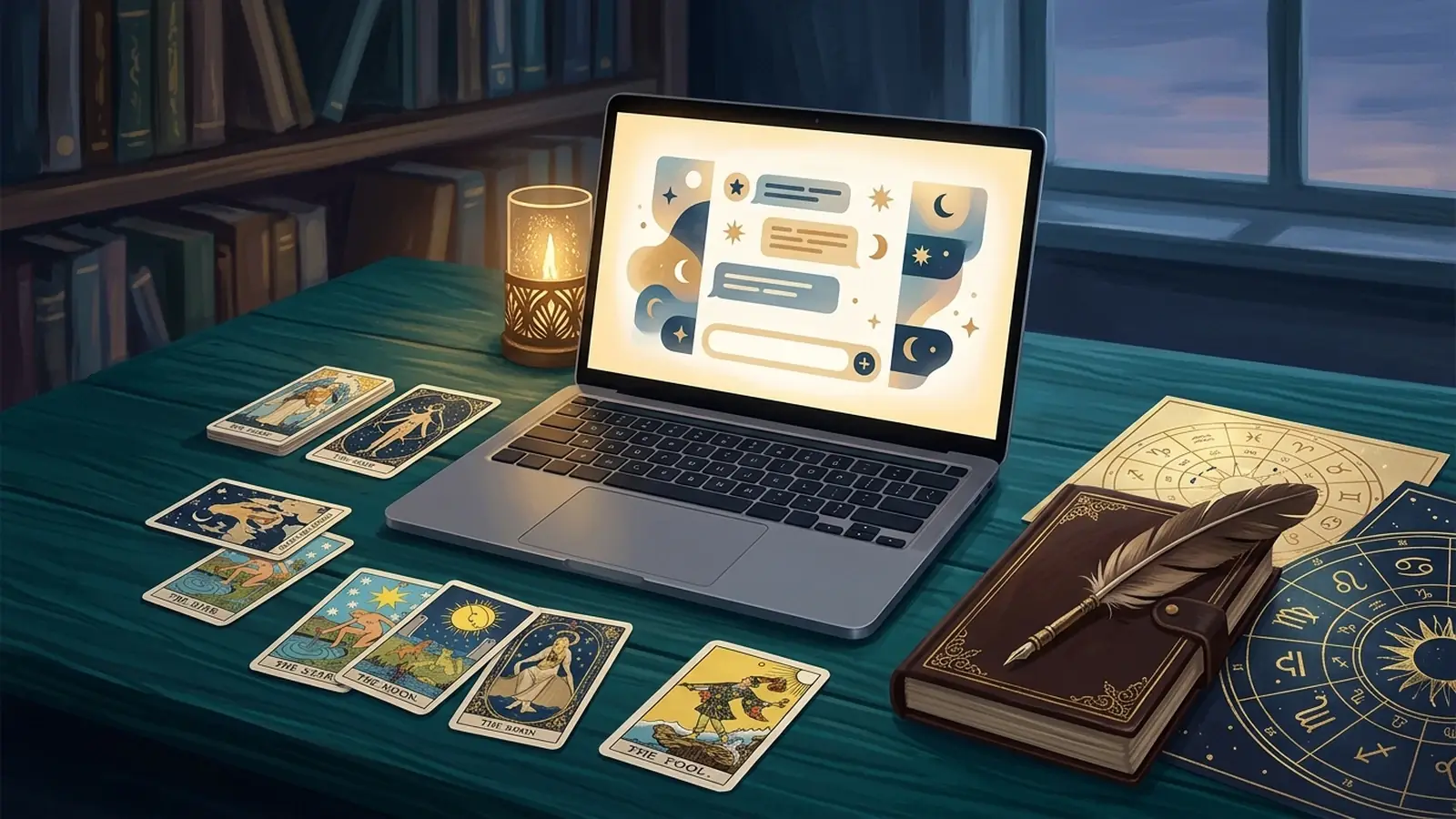
Tarot can’t tell you exactly what someone thinks of you, but it can show the general tone of their attitude toward you, the dynamic between you, and what you may be projecting onto the situation. The most useful way to ask is a spread that reads both sides, such as the 6-card Relationship Mirror Spread, and then to check the reading against how the person actually behaves over time.
Whether you’re typing “what does he think of me,” “does she like me,” or “how does someone feel about me,” the question underneath is the same: where do I stand with this person? This guide covers what a feelings reading can realistically show, how to ask so the answer is useful, and how to read the cards that come up most often.
What tarot can and can’t tell you about someone’s feelings
Tarot is not mind-reading. No spread can tell you for certain what another person thinks, and a reading that claims to is overselling. People are complicated, their feelings shift, and they make their own choices.
What a reading can do is give you a structured way to look at the connection. A good feelings reading tends to show three things:
- Tendencies: the general tone of their attitude toward you, such as warm, guarded, distracted or unsure.
- Your blind spots: what you might be projecting, hoping for or quietly avoiding.
- The dynamic: how the two of you interact, where things flow and where they get stuck.
Treat a feelings spread as a mirror held up to the connection, not a window into someone’s head.
Often the most useful insight turns out to be about you: what you want, what you’re afraid of, and what you can actually do next.
How to ask: good questions versus weak ones
The wording of your question shapes the whole reading. Weak questions ask the cards to confirm a single fact or to speak for someone else’s decisions. Better questions are open, specific and aimed at understanding.
- Weak: “Do they love me?” Better: “How do they seem to feel about me right now, and what shapes that?”
- Weak: “Will they text me back?” Better: “What has been going on between us since our last conversation?”
- Weak: “Are they going to leave their partner for me?” Better: “What do I need to understand about where I stand in this situation?”
- Weak: “Do they think about me as much as I think about them?” Better: “What does this connection mean to each of us at the moment?”
A quick test: if the answer would help you decide how to act, it’s a good question. If it would only calm you down for an hour, rephrase it.
The Relationship Mirror spread, position by position
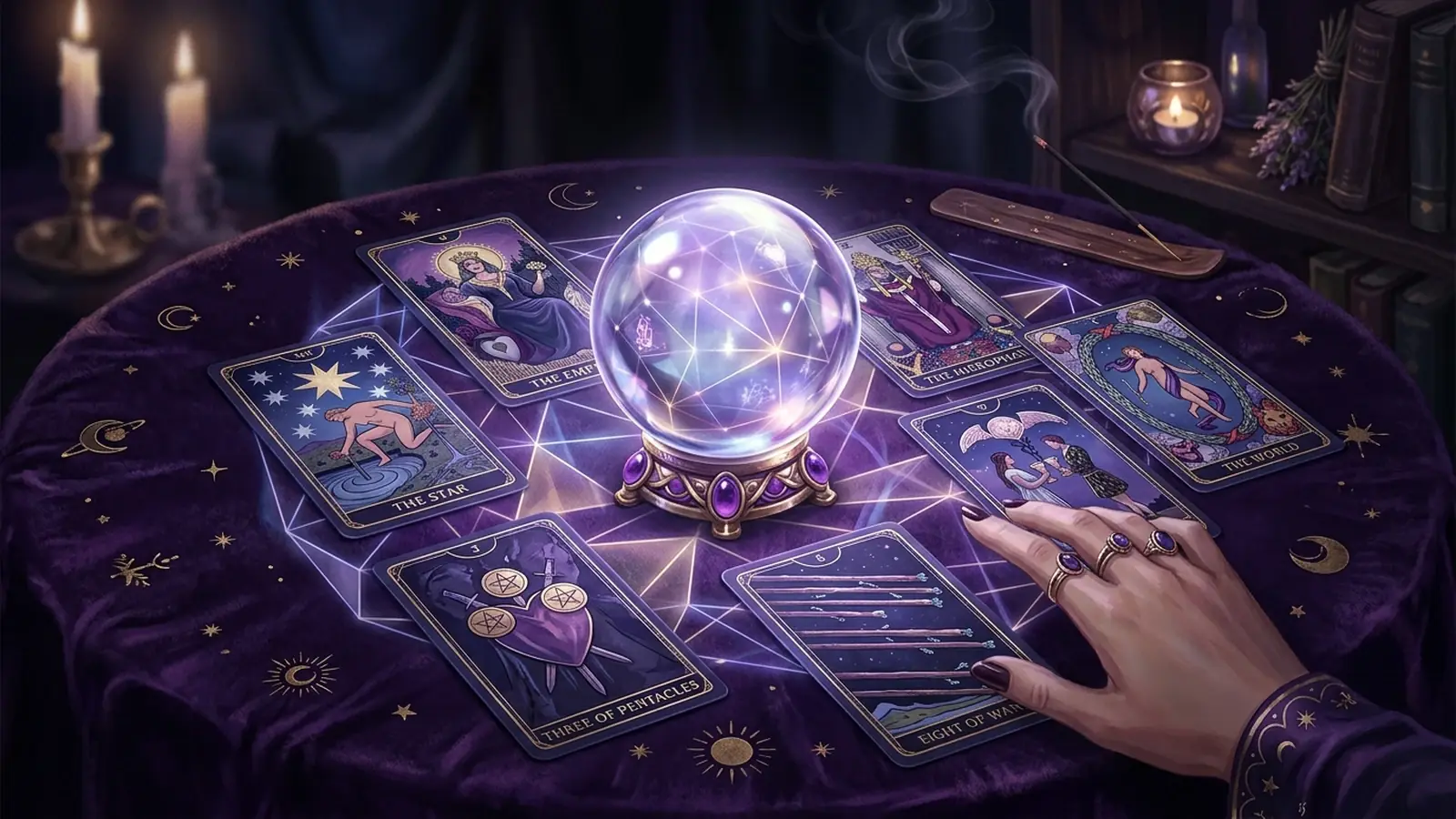
The free feelings tarot reading on this site uses a 6-card spread called the Relationship Mirror Spread. You choose whether the person is a crush, an ex or a partner, describe the situation in a few lines, draw six cards, and get an AI reading that ties them together.
The spread has two mirrored halves, one for each of you:
- Your thoughts about them: how you really see this person, beneath the hope or worry.
- How you see this relationship: what you believe this connection is right now.
- What you expect from the future: your hopes, and sometimes your fears, about where it’s going.
- Their thoughts about you: the general tone of how they seem to view you.
- How they see this relationship: what the connection appears to mean from their side.
- What they expect from the future: the direction they seem to lean toward.
Read it in pairs: your thoughts next to theirs, your view of the relationship next to theirs, your expectations next to theirs. Where a pair matches, you probably share more than you think. Where a pair clashes, that gap is usually the real story. One of you may want closeness while the other wants space, or one may see a romance where the other sees a friendship.
Starting with your own cards is deliberate. It’s much easier to read the other person fairly once you’ve seen your own hopes laid out in front of you.
Cards that often show warmth or interest
When these cards land in one of the positions about the other person, they often suggest warmth, attraction or care. Context always matters: the position, the neighboring cards and the real situation can soften or change the meaning.
- Two of Cups: often suggests mutual interest, a feeling that is returned and a sense of meeting as equals.
- The Lovers: often points to strong attraction and a sense that this connection matters, sometimes with a real choice attached.
- Ace of Cups: often suggests new or renewed feelings, an emotional opening that may still be quite fresh.
- Six of Cups: often suggests fondness and comfort; they may link you with ease or good memories.
- Knight of Cups: often shows romantic interest and a wish to express it, though it can lean idealistic.
- The Sun: often suggests they feel happy, relaxed and open around you, with little hidden.
- The Star: often suggests quiet admiration or hope, sincere feelings that may not be loudly expressed.
- Ten of Cups: often suggests they like the idea of something lasting and shared.
One warm card doesn’t settle the question. A Two of Cups next to The Hermit, for example, can describe real affection from someone who still needs plenty of space.
Cards that often show hesitation, distance or mixed feelings
These cards are not verdicts either. They often describe caution, distraction or conflicting emotions, which is very different from having no feelings at all.
- Four of Cups: often suggests they are distracted or withdrawn and not fully noticing what’s on offer.
- Two of Swords: often shows someone torn between options, avoiding a decision to protect themselves.
- The Hermit: often suggests a need for space and time alone, with their focus turned inward.
- The Moon: often points to mixed signals and uncertainty, on their side, yours, or both.
- Eight of Cups: often suggests emotional stepping back, a sense that something important feels missing.
- Seven of Swords: often suggests something is being kept private or left unsaid; it is not proof of dishonesty.
- Five of Pentacles: often shows someone going through a hard time or feeling not good enough, with little room left for romance.
- Knight of Swords: often suggests quick thoughts and strong opinions, more head than heart, or a fast approach followed by a fast retreat.
When these appear, the kinder and usually more accurate question is what the other person might be dealing with, not what is wrong with you.
Reversed cards in a feelings reading
A reversed card rarely flips the meaning into its opposite. More often it shows the same energy blocked, delayed, turned inward or expressed awkwardly. A reversed Two of Cups might describe interest that isn’t being shown, or a connection that has fallen out of balance. The Hermit reversed might suggest someone slowly coming back out of their shell, or retreating further than is healthy.
If you want to go deeper, the guide to reversed cards and psychology explains why a reversal is better read as information than as bad news.
After the reading: what to do next
A reading is a starting point for reflection, not a final answer. A few habits make it far more useful:
- Watch actions over time. How someone treats you consistently says more than any single card.
- Talk honestly. A calm, direct conversation is still the clearest way to learn how someone feels.
- Don’t ask the same question every day. Drawing again and again until the cards say what you want only adds noise and anxiety.
- Ask a follow-up instead. If part of the reading feels unclear, ask about that part of the same cards.
- Notice what the reading stirred up in you. Your own hopes and fears are worth exploring too.
Drawing the cards and reading what each one means is free, without signing up, and you can read the opening of the AI reading too. The full reading uses credits, so it’s worth spending on the question that matters most. Signed-in readers can ask follow-up questions about the same cards. Readings are also saved to your history, so you can look back in a few weeks and compare them with what actually happened.
If the person is an ex and you’re wondering about getting back together, the reconciliation tarot guide looks at that question in more depth.
Frequently asked questions
Can tarot tell how someone feels about me?
Tarot can show the general tone of someone’s attitude toward you and the dynamic between you, but it cannot read their mind. Treat the cards as tendencies to compare with how the person actually behaves over time.
Is a “how does he feel about me” tarot reading accurate?
It is accurate only in the limited sense of describing tendencies and patterns; it cannot confirm what another person thinks or will do. It is most useful when the question is specific and you check the reading against their consistent actions.
What is the best tarot spread for how someone feels about me?
A spread that reads both sides works best, because the gap between your view and theirs is usually the real story. The 6-card Relationship Mirror Spread on the feelings tarot page puts three cards for you next to three for them.
Does he miss me? Can tarot tell?
Tarot can suggest whether someone looks back on the connection fondly, for example through the Six of Cups, but it cannot tell you whether they miss you right now. Whether they reach out on their own is a clearer answer than any card.
Is the feelings tarot reading free?
Drawing the cards, reading what each card means and the opening of the AI reading are free without an account. The full reading and follow-up questions use credits.