Is AI Tarot Accurate? A 2026 Guide to Accuracy & How It Works
- What an AI reading can get right, what it cannot, and how to judge one for yourself
AI tarot can be accurate in one specific sense: a well-built system applies traditional card meanings to your question correctly and consistently. It is not accurate in the sense of predicting future events, and there is no scientific evidence that tarot, read by a person or by a machine, can do that. What a good AI reading offers is a structured reflection on your situation, and how "accurate" it feels depends mostly on how specific your question is and how honestly you check the answer against your real life.
This guide explains how an AI tarot reading is put together, why readings often feel uncannily personal, where AI readers are useful, where they fall short, and how to test a reading yourself.
What "accurate" can mean for a tarot reading
The word "accurate" covers three different things, and only two of them are realistic goals for any tarot reading.
- Accurate to the cards. Does the reading reflect what the cards traditionally mean, in the positions where they fell? This can be checked against standard references.
- Accurate to your situation. Does the reading describe the dynamics you are actually dealing with, such as a stalled conversation, a choice you keep postponing, or a fear you have not named? This is about relevance, not prophecy.
- Accurate about the future. Does the predicted outcome happen? Tarot has no demonstrated ability to do this, and a responsible reader, human or AI, should not present outcomes as certain.
When people say an AI reading was "spot on," they almost always mean the first two. That is worth having, but it is a different claim from foresight, and keeping the difference clear is the best protection against over-trusting any reading.
How an AI tarot reading is put together
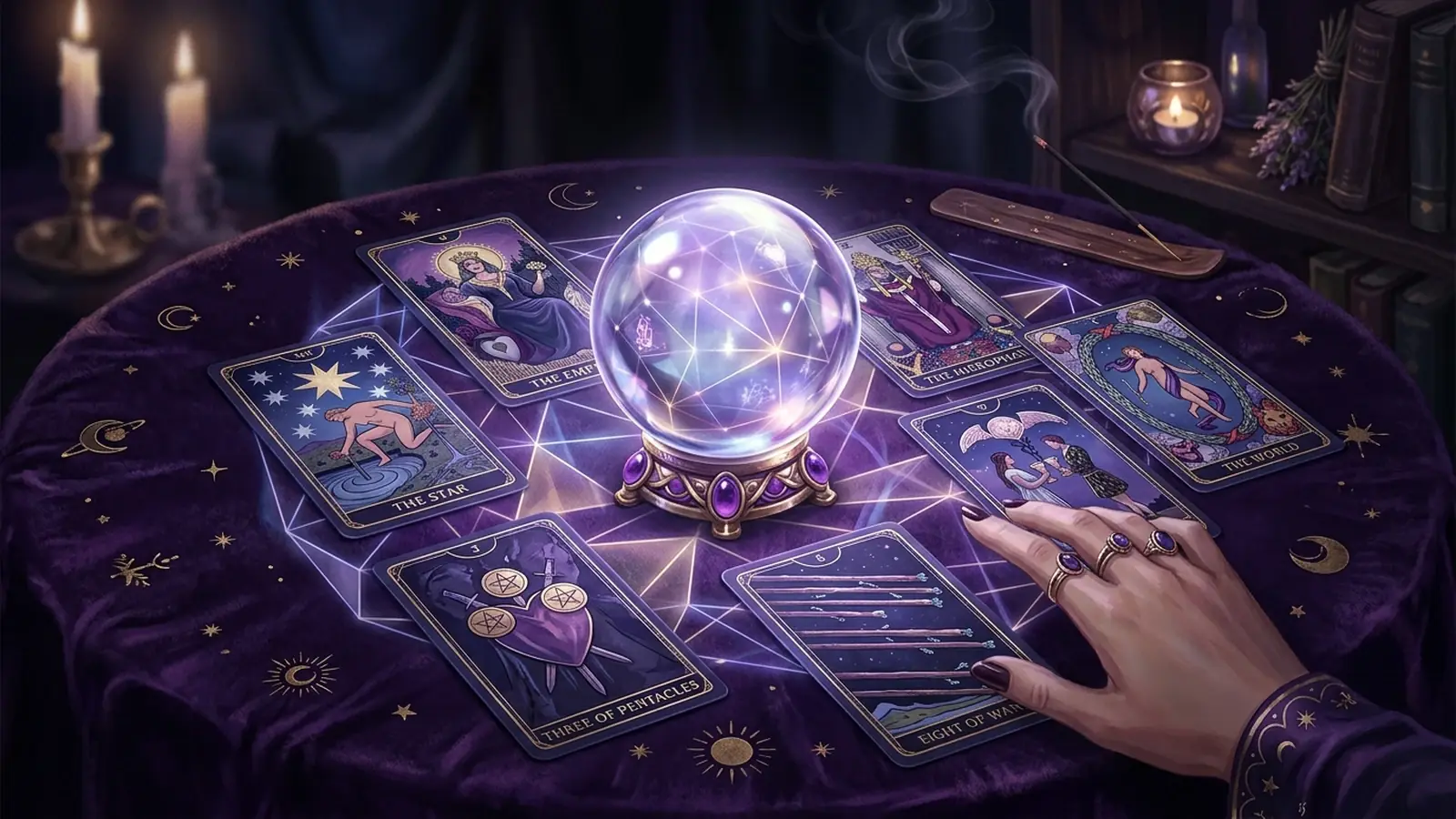
An AI tarot reading combines three inputs: the cards that were drawn, the meaning of each position in the spread, and the context you give. The cards should be drawn at random, by you or by the software; the language model's job is interpretation, not choosing the cards.
Large language models generate text by predicting likely words based on patterns learned from a very large body of writing. That body of writing includes a great deal of tarot literature, so a model can usually describe what The Tower or the Three of Swords traditionally signifies. A tarot product then adds its own layer: instructions about how to read positions, how to treat reversed cards, what tone to use, and which topics to handle carefully.
So the quality of an AI reading depends on two things. One is how well the product is designed to stay faithful to the cards and the spread. The other is the quality of your question, which the next sections come back to.
Why AI readings often feel accurate
Readings feel accurate partly because tarot's symbols are broad enough to fit many lives, and partly because people naturally connect general statements to their own experience.
Psychologists have studied the second part for decades. In 1949 the psychologist Bertram Forer gave his students a "personalized" personality sketch, published in the Journal of Abnormal and Social Psychology; most rated it as a very good description of themselves, although every student had received the same text. This tendency to accept vague, widely applicable statements as personal is now called the Forer effect or Barnum effect, and it applies to horoscopes, personality quizzes and tarot alike.
Tarot cards themselves are built from big human themes. The Three of Swords is about hurt, The Tower is about sudden change, and the Ace of Cups is about new feeling. Almost everyone has something in their life that matches one of these. An AI that writes fluently can make that match feel precise.
None of this means a reading is useless. It means the feeling of "that's me" is not, by itself, evidence that the reading knows something you don't. The useful question is whether the reading helped you see your situation more clearly.
Where AI tarot is genuinely useful
AI tarot is most useful as a thinking aid: it turns a vague worry into named parts you can look at one by one.
- It organizes a messy situation. A three-card or Celtic Cross spread forces the reading into positions such as cause, obstacle and advice, which helps separate what you know from what you fear.
- It is consistent about meanings. A well-designed system won't forget what a card means or skip a position, which is a common problem for beginners reading alone.
- It responds to follow-up questions. You can ask what a specific card says about the other person, or what the advice card suggests you do this week, instead of rereading a fixed text.
- It is available when you need to think. Late at night, after an argument, before a hard conversation, writing out the question is often half the value.
A good reading also shows you where your own reaction lands. If you feel relief at one card and resistance at another, that response tells you something about what you already want.
Where AI tarot falls short
AI tarot cannot know facts you haven't shared, cannot see what other people are thinking, and cannot guarantee any outcome.
- It only knows what you tell it. If you describe a relationship from one angle, the reading works from that angle. It cannot check the other person's side.
- It can sound more certain than it should. Language models write fluently, and fluent text can feel authoritative. Treat confident wording as style, not as proof.
- It can mirror your framing. A leading question ("Is he just scared of how much he loves me?") tends to produce a reading that follows the lead.
- It is not a professional service. Health symptoms, legal disputes, debts and investments need a doctor, lawyer or qualified adviser. A reading can help you think about how you feel, not replace evidence or expertise.
- Repeated draws dilute the meaning. Drawing again and again on the same question until you get a pleasant answer turns tarot into a slot machine.
If you are in crisis or thinking about harming yourself, please contact local emergency services or a crisis line rather than a tarot reading.
How to test an AI reading yourself
The fairest test of an AI reading is whether its specific claims and suggestions hold up when you check them against real life over time.
- Check the card meanings. Look up each card in a standard reference, such as our Tarot Card Meanings library, and see whether the reading stays close to it.
- Separate description from prediction. Mark which sentences describe your current situation and which predict something. Only the first kind can be checked right away.
- Write the prediction down with a date. If a reading suggests a change "in the coming weeks," note it and look again later, rather than relying on memory, which tends to keep the hits and forget the misses.
- Ask whether it would fit anyone. If a line would be true for most people in your situation, it is general, not personal. That's fine, but recognize it.
- Judge the advice. Is the suggested next step something concrete and reasonable that you could do this week? Good advice is the most useful part of any reading.
How to get a more useful AI reading
The clearer and more honest your question, the more useful the reading tends to be.
Give real context: what happened, what you have already tried, and what you are actually deciding. Ask about your own next step rather than about controlling someone else. "What should I keep in mind before I reach out to them this week?" gives the cards something to work with; "Will they come back?" asks the reading to predict another person's free choice.
Focus on the advice position, not only on whether cards look "good" or "bad." Difficult cards often carry the most practical information about what to change. If you want a quick lean on a simple decision, a Yes or No Tarot draw is designed for that; for anything with several moving parts, a full spread is a better fit.
Finally, leave space between readings. Come back to the same question after something has actually changed, not an hour later.
How readings work on Nyan Parlor
On Nyan Parlor, the cards are drawn first and the AI reader, Geumeum, interprets the cards you received in their spread positions. Drawing cards and reading card meanings is free with no sign-up, and the opening lines of each AI reading are free; the full reading uses credits. Signed-in users can ask follow-up questions about the same cards, which is often where the most useful part of a reading comes from.
The same limits apply here as anywhere: the reading reflects symbolism and the context you share, and the decisions remain yours.
Frequently asked questions
Can AI do a tarot card reading?
Yes, AI can interpret a tarot spread, as long as the cards come from a real random draw rather than being chosen by the model. The AI’s job is to apply each card’s traditional meaning to its position and to your question; it cannot make the cards more predictive than they are when a person reads them.
Can ChatGPT be used for tarot readings?
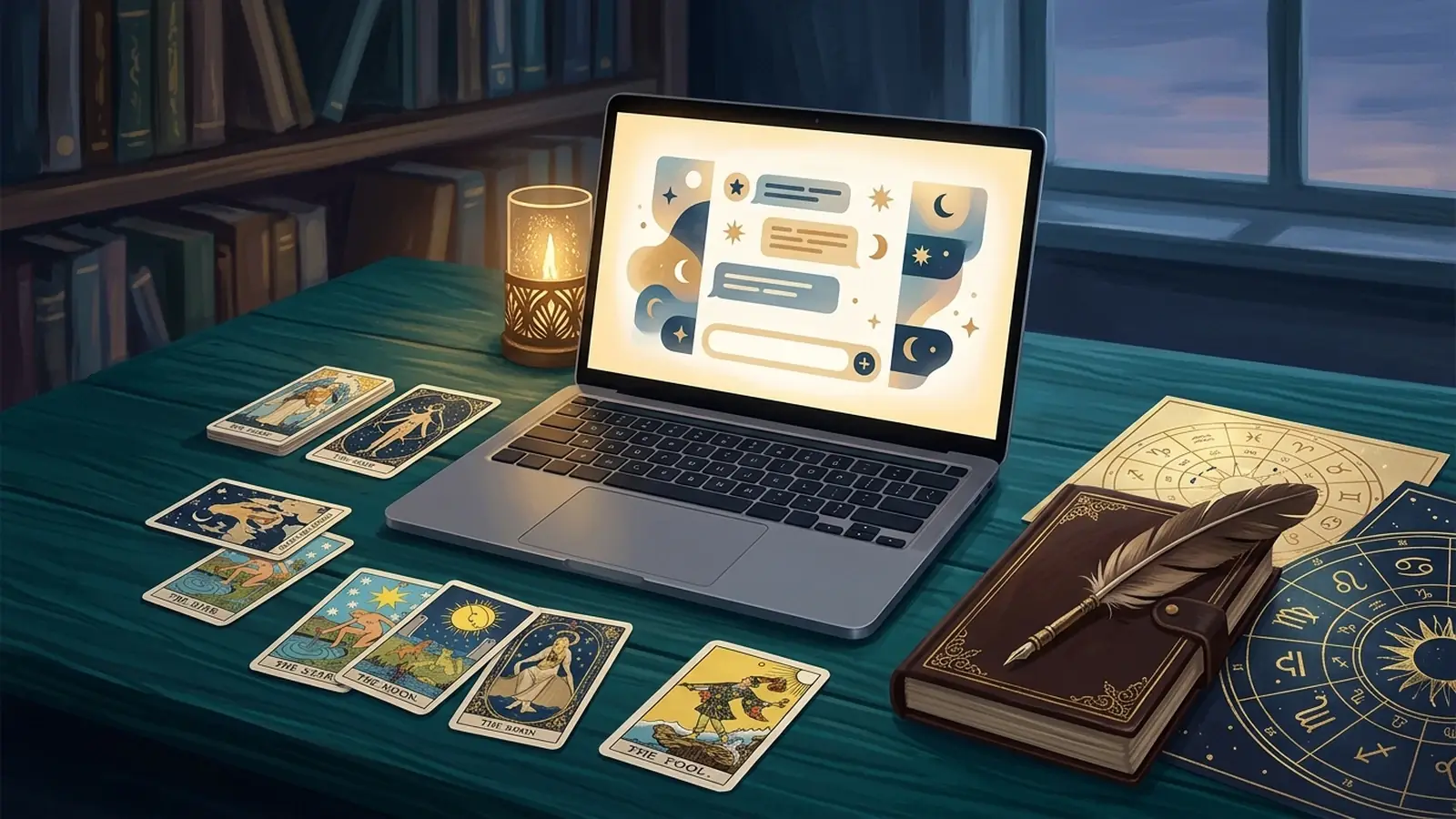
Yes, ChatGPT can explain card meanings and interpret a spread you describe to it. The weak points are that a general chatbot often “draws” cards by inventing them, does not keep fixed spread positions unless you give them, and may not remember your earlier readings. Drawing the cards yourself first, physically or with an online random draw, and then giving it the cards, positions and question avoids the first problem.
Which AI tool is best for interpreting tarot cards?
The most useful AI tarot tool is one that shows you a real random draw, reads each card in its spread position, lets you ask follow-up questions about the same cards, and is honest that it cannot predict the future. Those four points are easy to check in a few minutes with any tool, including this one.
Are tarot readings 100% accurate?
No. No tarot reading, by a person or by AI, is 100% accurate, and there is no scientific evidence that tarot predicts events. A reading can be accurate to the cards and relevant to your situation, which is what makes it useful for reflection.